
Warhammer: Chaos & Conquest
Tilting PointStrategy
4.43.92K Reviews
- Version
- 5.0.1
- Installs
- 1.00M
- Age Rating
- Teen
Screenshots
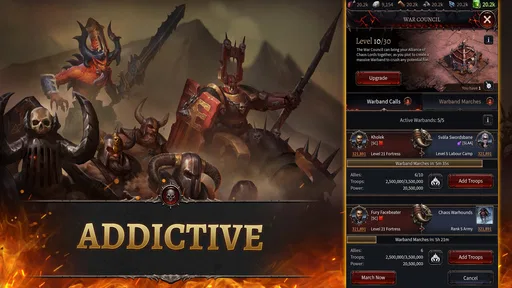
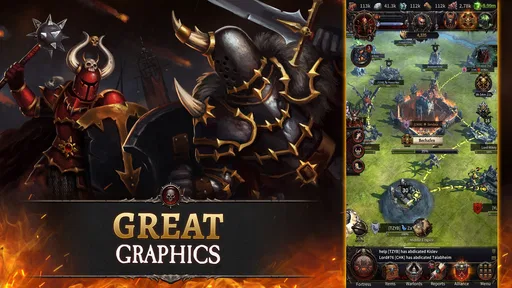
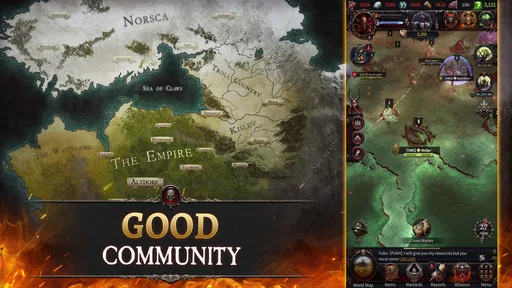
Our Review of Warhammer: Chaos & Conquest
 Analysis by Appyee
Warhammer: Chaos & Conquest is the kind of strategy game that can feel surprisingly easy to slip into during the first few days. I build up a base, recruit a force, watch timers move forward, and make decisions about where my limited attention matters most. That loop is familiar, but the Warhammer setting gives it a darker personality than a typical kingdom builder. Instead of managing a bright fantasy village, I am working toward a more threatening stronghold surrounded by conflict, rival ambitions, and the constant pressure to improve.
After spending time with it, my main question is not whether the game can entertain me for an evening. It can. The more useful question is whether it deserves a regular place on my phone after the initial novelty fades. My answer is qualified: it works best for players who enjoy gradual progress, planning around timers, and participating in a larger war rhythm. It is less convincing for anyone who wants quick battles, a compact campaign, or a strategy game that can be played entirely on demand.
What the first week feels like
The opening experience is built around learning how the different parts of the stronghold support one another. I am not simply tapping a single upgrade button and waiting for a stronger army. Buildings, research, resources, troops, and map activity all compete for attention. That creates a useful early tension: spending now may speed up my next objective, but saving materials can make a more important improvement possible later.
The first sessions have a clear sense of momentum. Progress arrives often enough to make the next login feel worthwhile, and the game gives me several small decisions instead of asking for one grand strategic plan immediately. This is where the title is most welcoming. I can experiment with construction priorities, learn the value of keeping production moving, and get a feel for how aggressive I want to be without needing to understand every layer at once.
The Warhammer identity also helps the opening stand out. The tone is more severe than the usual mobile strategy backdrop, and the idea of forming a legion gives the early development a stronger purpose than simply expanding a generic settlement. I found that the setting made routine upgrades feel more connected to a wider conflict. That does not transform the underlying structure, but it gives the familiar structure a reason to hold my attention.
One practical lesson became clear quickly: a strong start depends less on clicking through every available action and more on keeping a sensible order of priorities. I prefer to secure the improvements that support steady resource flow before chasing every tempting military option. A new unit can feel exciting, but an army that cannot be maintained becomes a drain on future progress. This is one of the first trade-offs that separates thoughtful play from simply spending whatever is available.
Another useful habit is to begin longer actions before putting the phone down. If I know I will be away for a while, a research or construction task with a meaningful duration is more valuable than starting something short and leaving the game idle. That sounds obvious, but it changes the way I use the game during an ordinary day. It becomes something I prepare for, rather than something I open only when I happen to be bored.
The game is free to download, which makes that first-week experiment easy to justify. It is rated Teen, so it is aimed at an older audience than a child-focused strategy title. Optional purchases range from $0.99 to $99.99 per item, and that range matters when judging the experience. I can play without paying, but the presence of inexpensive small purchases alongside very large ones means I need to be disciplined about what I consider progress and what is simply convenience.
Where the early strategy has real substance
The most satisfying early decisions are not always the dramatic ones. I get more value from choosing when to commit resources than from constantly searching for a fight. If I improve several areas at once, I may feel busy but end up with a weak overall position. Concentrating on a clear development path produces a stronger sense of direction and makes mistakes easier to understand.
I also like that the game encourages me to think about time as a resource. A player who checks in briefly at sensible intervals can often get more from the same amount of attention than someone who opens the app repeatedly without a plan. That gives the first week a small layer of routine-building. The title is not demanding deep concentration every minute, but it rewards remembering what is currently underway.
For a realistic everyday scenario, imagine opening the game during a morning commute, starting an upgrade, and checking the army before work. At lunch, I can collect completed work and queue the next useful task. In the evening, I have a clearer choice: spend time on the map, adjust my priorities, or leave a longer process running overnight. This pattern suits me when I want a strategy game that fits around other responsibilities rather than taking over an entire sitting.
What remains valuable after the novelty fades
The month-to-month experience depends heavily on whether I enjoy incremental improvement for its own sake. The game does not rely on a short story that reaches a clean ending and sends me away satisfied. Its appeal comes from continuing to develop the citadel, improve the legion, and make better use of the systems I already understand. That can be rewarding, but it also means the game needs to become a habit rather than a one-time challenge.
Tilting Point has built the experience around a familiar long-term strategy pattern: progress is measured through many connected improvements instead of one decisive victory. I appreciate that structure when I want something persistent. There is always a reason to consider the next upgrade, the next military goal, or the next way to make my position more efficient. The downside is that progress can feel less dramatic once the early rewards become less frequent.
My strongest long-term use case is as a background strategy game. I can return to it several times in a day, make a few meaningful choices, and leave. It does not need to replace a dedicated evening game to be worthwhile. In fact, I think it is better when treated as a steady side activity. Players who expect every session to deliver a major battle or a dramatic reversal may find the routine too slow.
The alliance-focused side of the concept is important to its staying power. A solitary player can still enjoy building and planning, but the broader war feeling is more convincing when there is a social reason to remain involved. Cooperation can make ordinary progress feel connected to something larger. At the same time, social commitment can turn a relaxing game into an obligation, especially if I feel pressure to log in at inconvenient times or keep pace with more active members.
This is where the game compares interestingly with simpler city-building alternatives. A basic builder may offer a calmer, more private experience, with fewer reasons to worry about other players or the wider map. Warhammer: Chaos & Conquest has more atmosphere and a stronger sense of shared conflict, but that comes with more responsibility. If I want a peaceful construction sandbox, another option may suit me better. If I want my base to matter within an ongoing strategic setting, this game has the stronger argument.
It also differs from fast mobile battle games. Those titles usually give me immediate control and a short feedback loop: start a match, make quick decisions, and receive a result. Here, the important decision may be made before the battle even begins, through preparation, development, and timing. I enjoy that slower form of strategy, but I would not recommend it as a substitute for a game built around rapid action.
How I keep the routine from becoming wasteful
My best approach is to assign each login a purpose. One visit might be for collecting and beginning construction, another for checking military readiness, and another for making a map decision. Without that focus, it is easy to spend time browsing the same screens and mistaking activity for progress. The game feels more rewarding when I know what I am trying to improve before opening it.
I also avoid treating every available upgrade as equally urgent. Some improvements help the economy or unlock future choices, while others mainly offer a short-term boost. I would rather maintain a stable development chain than repeatedly interrupt it for attractive but poorly timed gains. This is a subtle strength of the game: it gives me room to create my own priorities, even though the overall framework is familiar.
A further trade-off appears when purchases enter the picture. Spending can reduce waiting or smooth out a difficult moment, but it can also weaken the satisfaction of planning around the game’s pace. I recommend deciding on a personal limit before buying anything, not after frustration has already built up. The free entry point is useful, but the wide purchase range makes self-control part of the long-term experience.
The maintenance burden of keeping a stronghold moving
The game’s maintenance demands are moderate at first and more noticeable later. Early on, nearly every action feels useful, so checking in is naturally rewarding. Over time, the question becomes whether the next login offers enough meaningful choice to justify the attention. If I remain organized, the routine stays manageable. If I let several priorities compete without a plan, the game begins to feel like administrative work.
Timer-based strategy games always ask for a certain amount of scheduling, and this one is no exception. I need to remember what is building, what is researching, what resources are available, and whether my military plans match my current capacity. None of those tasks is difficult individually. The burden comes from their accumulation. Players who dislike waiting or managing several parallel goals may lose patience before the deeper strategy has a chance to develop.
My practical recommendation is to use natural parts of the day as anchors. A morning check, an evening check, and an occasional extra visit are enough for a relaxed approach. I would not build my schedule around constant notifications or feel compelled to react to every completed action immediately. The game is more enjoyable when it supports my routine instead of dictating it.
Device compatibility is fairly accessible for an older phone, since it requires Android 8.0 or later. The current version is 5.0.1, so anyone installing it should still keep the app updated through the normal platform process. I mention this because long-running strategy games depend on reliable maintenance from both the player and the developer. A neglected installation can create more friction than the underlying design deserves.
The maintenance burden also depends on how seriously I take alliances and competition. A casual player can treat social activity as an optional layer and progress at a comfortable pace. A committed participant may need to coordinate more often and care about timing beyond personal convenience. That difference is important: the same game can feel pleasantly flexible to one person and demanding to another.
Where fatigue begins
The first source of fatigue is repetition. Building, collecting, researching, and preparing an army are satisfying when they lead to visible change. When the same cycle becomes the main event, I start wanting more variety from each session. The setting can keep the routine attractive for a while, but atmosphere cannot completely hide a loop that has become predictable.
The second source is delayed gratification. I like planning around a wait when the reward feels meaningful. I dislike it when I open the game mainly to discover that the action I care about is still unavailable. This is not a flaw unique to this title, but it affects whether I see the game as a relaxing strategy hobby or as another appointment competing for my attention.
The third is the pressure created by optional spending. Even when I choose not to buy, the knowledge that purchases can change the pace may affect how I interpret setbacks. A difficult moment can feel like a strategic problem, a patience test, or an invitation to spend. I prefer to treat it as a reason to reassess my priorities first. That mindset protects the parts of the game I actually enjoy.
There is also a mismatch between the game’s theme and its slower structure. The Warhammer name suggests violence, urgency, and powerful confrontations, while much of the daily experience is controlled preparation. I do not consider that contradiction a deal-breaker, but players arriving for constant action should understand it. The strongest fantasy here is not being in battle every minute; it is building the capacity to matter when conflict arrives.
Who should make room for it
I would recommend Warhammer: Chaos & Conquest to someone who likes persistent strategy, base improvement, and the feeling of belonging to a larger war effort. It is especially suitable for players who enjoy checking a game in short bursts and making decisions that pay off later. The free price makes it reasonable to try, and the first week gives enough direction to judge whether the rhythm fits your habits.
I would be more cautious recommending it to someone who wants a complete, self-contained campaign. The game is designed around continuation, so its value comes from the ongoing process rather than a final conclusion. It is also not my first choice for a player who wants quick matches, direct control, or a strategy experience with minimal waiting.
Compared with a traditional real-time strategy game, this is more about preparation and persistence than rapid tactical execution. Compared with a simple idle builder, it asks for more judgment and offers a stronger war identity. Compared with a highly competitive multiplayer strategy game, its appeal depends on how much pressure the player is willing to accept from alliances, timing, and long-term progress. Those distinctions make the choice fairly clear once I know what kind of session I want.
The audience rating of Teen fits the serious tone and conflict-focused premise. I would still consider the individual player’s tolerance for darker fantasy themes and competitive pressure, especially if the device is shared with a younger family member. For adults and older teens who already enjoy the Warhammer universe, the setting gives the systems a useful emotional hook rather than feeling pasted on afterward.
One of the less obvious strengths is that the game can reward restraint. I do not need to react to every opportunity immediately, and sometimes the best move is to let development continue while I wait for a better moment. That makes it more thoughtful than its repeated upgrade loop might suggest. The weakness is that this same patience can feel like inactivity when I am not in the mood for a slow-burn game.
Another strength is its suitability for a split-session lifestyle. I can engage with it while waiting for an appointment, during a break, or at the end of the day without needing to reserve a long uninterrupted block. The trade-off is that the game may gradually occupy more mental space than expected if I become invested in an alliance or a long development plan. I recommend deciding in advance how often you want to check it, then treating that limit as part of your strategy.
My long-term verdict
After the opening excitement settles, Warhammer: Chaos & Conquest earns its place through routine rather than surprise. Its best qualities are the connected progression systems, the grim Warhammer atmosphere, and the satisfaction of turning a developing citadel into a more capable strategic base. I enjoy it most when I approach each login with a plan and accept that progress will be gradual.
It does not completely escape the familiar weaknesses of mobile strategy games. Repetition, waiting, social pressure, and the temptation of purchases can all become tiring. The game is not ideal for someone seeking constant action or a short path to completion. Its lasting value depends on whether preparation feels like play to you, not merely a delay before the interesting part.
With an average rating of 4.4 from over 46 thousand ratings and more than a million installs, it has clearly found a substantial audience. Those figures do not decide my opinion, but they match my experience of a polished, accessible strategy game with a committed identity. The developer, Tilting Point, has positioned it as a long-running mobile experience rather than a brief novelty.
My final recommendation is to try it as a measured habit, not an obligation. Give the first week enough time to learn the economy, the military priorities, and the alliance rhythm. Then ask whether the next month sounds appealing when the early rewards slow down. If you enjoy making careful choices between immediate strength and future stability, it can remain a satisfying companion. If you need every session to deliver action, another strategy game will probably use your time better.
For me, the title lasts because it turns small decisions into a continuing sense of ownership. I am not simply completing isolated matches; I am maintaining a position and deciding what kind of power it should become. That is a narrower appeal than the name might suggest, but for the right player, it is enough to keep the game installed well beyond the first week.
Verdict
Strengths of Warhammer: Chaos & Conquest
- Deep Warhammer lore creates an immersive strategy experience.
- Multiple Chaos factions offer varied playstyles and army compositions.
- Alliance features encourage cooperation and coordinated attacks.
- Regular events provide new objectives and rewards.
- Base-building progression gives you meaningful long-term goals.
Limitations of Warhammer: Chaos & Conquest
- Progress can feel slow without frequent play or resource spending.
- PvP matchmaking may place developing players against stronger opponents.
- The interface can feel crowded on smaller phone screens.
- Many upgrades require waiting timers that interrupt momentum.
- A stable internet connection is required for most gameplay features.
Other Releases by Tilting Point
View All
SpongeBob Adventures: In A Jam
Simulation4.6

Star Trek™ Timelines
Role Playing3.7

Avatar: Realms Collide
Strategy4.5
Similar Picks in This Category
View All
Clash of Clans
Supercell4.5

Plants vs. Zombies™
ELECTRONIC ARTS3.7

Lords Mobile: Kingdom Wars
IGG.COM4.5

Clash Royale
Supercell4.4

State.io — Conquer the World
CASUAL AZUR GAMES4.1

Car Driving School : Car Games
Spark Game Studios3.9
Frequently Asked Questions
What is Warhammer: Chaos & Conquest?
Warhammer: Chaos & Conquest is a mobile strategy game set in the dark Warhammer universe. You build and develop a fortress, gather resources, research upgrades, train armies, and recruit powerful champions. The main focus is long-term kingdom management combined with real-time decisions, map exploration, alliances, and battles against other players or hostile forces.
Is Warhammer: Chaos & Conquest free to download and play?
The game is generally free to download, but it includes optional in-app purchases. You can progress without spending money by completing missions, collecting rewards, and managing resources carefully, although paid bundles may speed up construction, research, or troop training. Players should also expect online features and a stable internet connection to be required for most gameplay.
Does the game require an internet connection?
Yes, Warhammer: Chaos & Conquest is designed as an online multiplayer strategy experience and normally requires an active internet connection. Your progress, alliance activity, events, battles, and server-based features depend on connecting to the game’s servers. It is therefore not a suitable choice if you are looking for a fully offline Warhammer game.
Can I play with friends or join an alliance?
Yes, social and alliance features are an important part of the experience. You can join an alliance, communicate with other players, cooperate during events, receive assistance with development, and participate in group activities. Working with an active alliance is especially useful because coordinated players can defend territory, support armies, and compete more effectively against rival groups.
Is Warhammer: Chaos & Conquest suitable for beginners?
The game is accessible to newcomers, particularly if you follow the early tutorials and complete the guided missions. However, it becomes more complex as you manage several upgrade timers, resource types, commanders, armies, and alliance responsibilities. New players should expect a gradual learning curve and should avoid spending resources too quickly until they understand the economy and combat systems.
Play our best games!


